

July 16, 2026
A few years ago, a private padel court was a Spanish quirk. In 2026, it is one of the clearest signals of where racquet sport, and the homes built around it, are heading.
A Sport Comes Home
When we first wrote about padel in luxury homes, most of the momentum sat inside clubs and developments. That has changed. A new club now opens somewhere in the world roughly every two and a half hours, and the faster-moving story for our world is happening on private property.
The conversation around padel has changed. It is no longer only about the sport’s growth, but about what a private padel court adds to a home: more use, more flexibility, stronger lifestyle value, and a clearer point of difference in the market. For tennis estates, second homes, and new-build projects, padel has become part of the private-court conversation. Here is where the sport stands in 2026, and what its rise means for homes built around racquet sport.
The Numbers in 2026
The most recent Global Padel Report from Playtomic and PwC puts the global count at 58,300 courts, with the industry projecting 91,000 by 2028, and the sport is now established in more than 90 countries. One figure explains the rest: a 92 percent return rate after a single session. A sport that keeps that many first-time players is a sport people build around.
The United States is the market to watch. It crossed 1,000 courts in early April 2026 across 37 states, up from 688 a year earlier, with Florida holding around 40 percent of them and Texas, California, and New York close behind. Capital is following: the Pro Padel League raised 15 million dollars this spring, and the US Padel Association expects 30,000 courts and 10 million players in the country by 2030. Playtomic projects the US to show the strongest padel growth of any market through 2035.
The pull is cultural too, not only statistical. Kith opened Kith Ivy, a members-only padel and wellness club in New York’s West Village, with a Wilson collaboration on rackets and apparel. Golden Goose opened a nine-court padel arena in Milan and launched an activewear line with Babolat. When fashion houses build around a sport, the court stops reading as a fad and starts reading as culture.
Reserve is the clearest version of the pattern. Wayne Boich put a padel court in the backyard of the Miami house he was building, added another at his home in the Hamptons, and started hosting exhibitions there in 2015. That became Reserve, now five clubs across Miami and New York, with a court division that builds custom installations for private residences. The brand started on private property and went back to it.
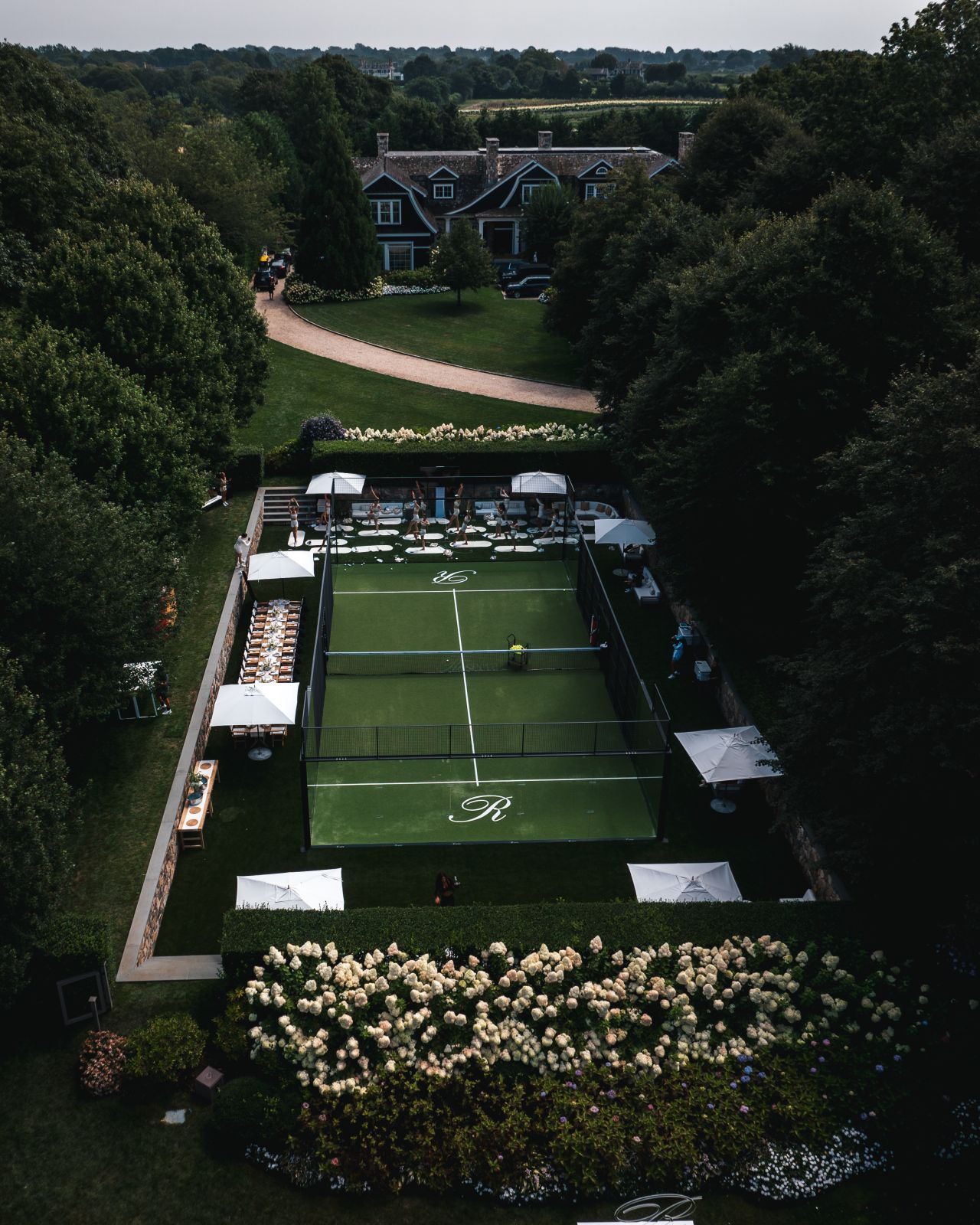
Image credit: Reserve Padel | The Reserve Hamptons Invitational
Onto Private Property
The shift that matters for our world is where those courts are going. In the US, private and residential courts are expected to make up a larger share of padel than in most other markets, particularly in Florida, Texas, and California, where luxury homes build padel in as part of the amenity package rather than as an experiment.
The clearest signal sits at the top of the market. At 111 West 57th Street in Manhattan, the only private padel court in a New York residence anchors the amenity floor of a building where condos run from 20 million to 110 million dollars, and Sotheby’s has called it one of the most-used amenities there. In South Florida, padel is going straight into residential communities. At SoLé Mia, the 184-acre North Miami development from LeFrak and Turnberry, Reserve opened a two-storey, 100,000-square-foot club with ten courts, positioned as an everyday amenity for residents rather than a novelty. When that is the read on what the next buyer wants, padel has stopped being a feature people tolerate and become one they plan around.
Why the Court Fits the Home
Part of the appeal is geometry. A padel court takes up roughly a third of the footprint of a tennis court, which makes it workable on plots where a full court would crowd out the pool or the gardens. Build estimates in the US run between 50,000 and 100,000 dollars per court, enough to read as intentional rather than decorative. And because padel is built for doubles, the court draws four people into a daily match, while the glass-walled structure reads as architecture in a way a fenced tennis court rarely does.
The growth comes with friction worth understanding. Padel courts can be harder to permit than their size suggests, partly because the sound of the ball against glass carries, and US projects that expected to open in six to twelve months have seen timelines stretch to two or three years. On a private estate, placement and acoustic planning decide whether the court is a pleasure or a complaint.
There is also what the court signals. Tennis still reads as legacy, pickleball as social and high-volume, padel as newer and more cosmopolitan. The strongest estates treat these as a portfolio rather than a choice, and padel is the piece that signals the home is current. For a buyer, the test is whether it was built as a destination or dropped in to claim the feature, the same logic we apply when reading a tennis court.
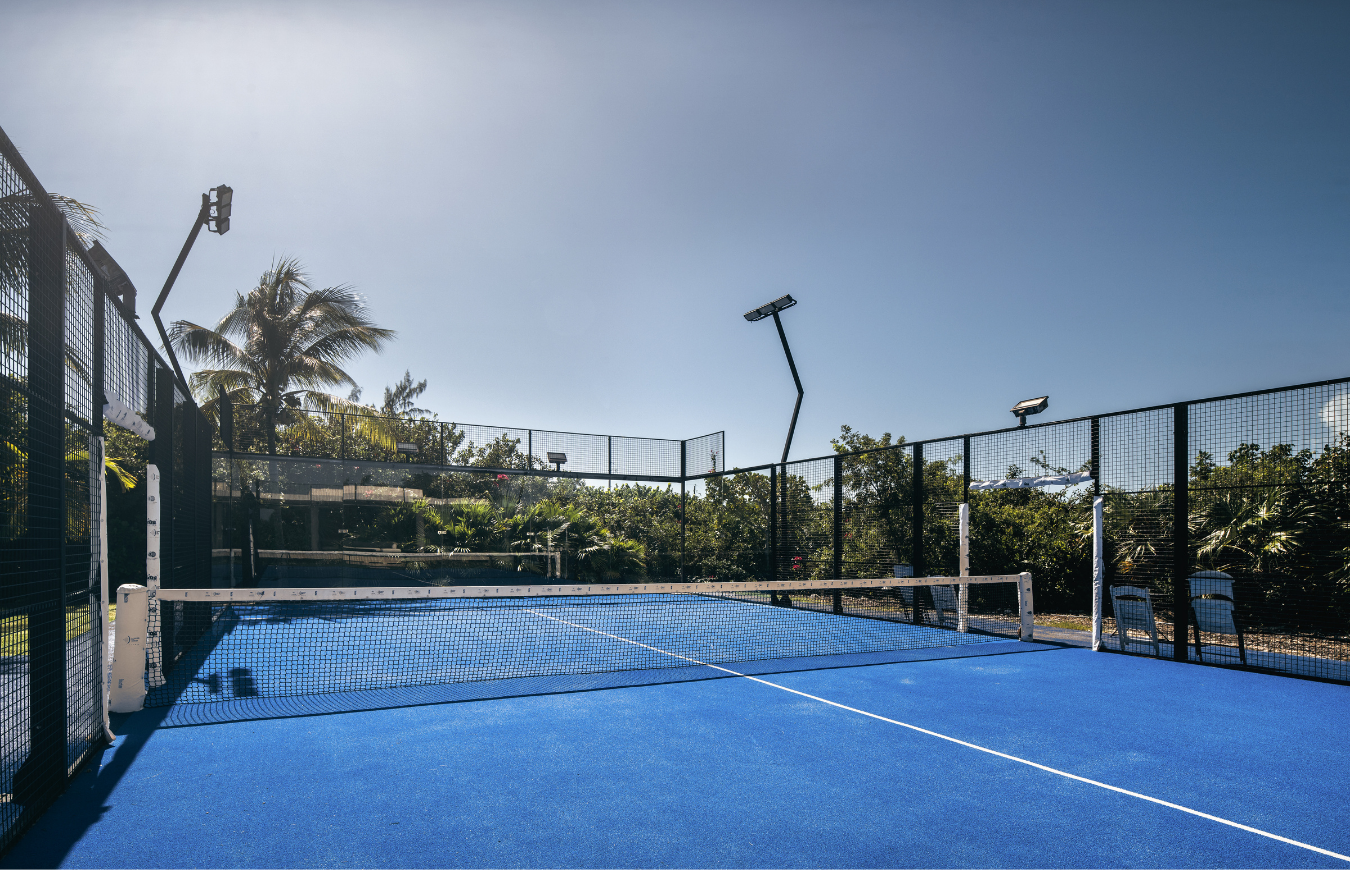
Featured: Triton Villa | Ian Hurdle with The Agency TCI
Padel in the Tennis Homes Network
Across the homes we track, padel still appears on only a small number of properties, which is part of why a well-built private court is worth attention. We currently hold six homes with padel across sale and rental, with a few more kept privately within the network.
The homes that hold their value are the ones where the court was considered as carefully as the architecture around it. Padel does not change that standard. It gives owners a new way to meet it.
If the Court Matters
If you are weighing a court on land you own, or looking for a home where the court was built to be played:
Until the next match,
Tennis Homes