

What Innovation Is Doing to the Tennis Court
The Court Is Waking Up
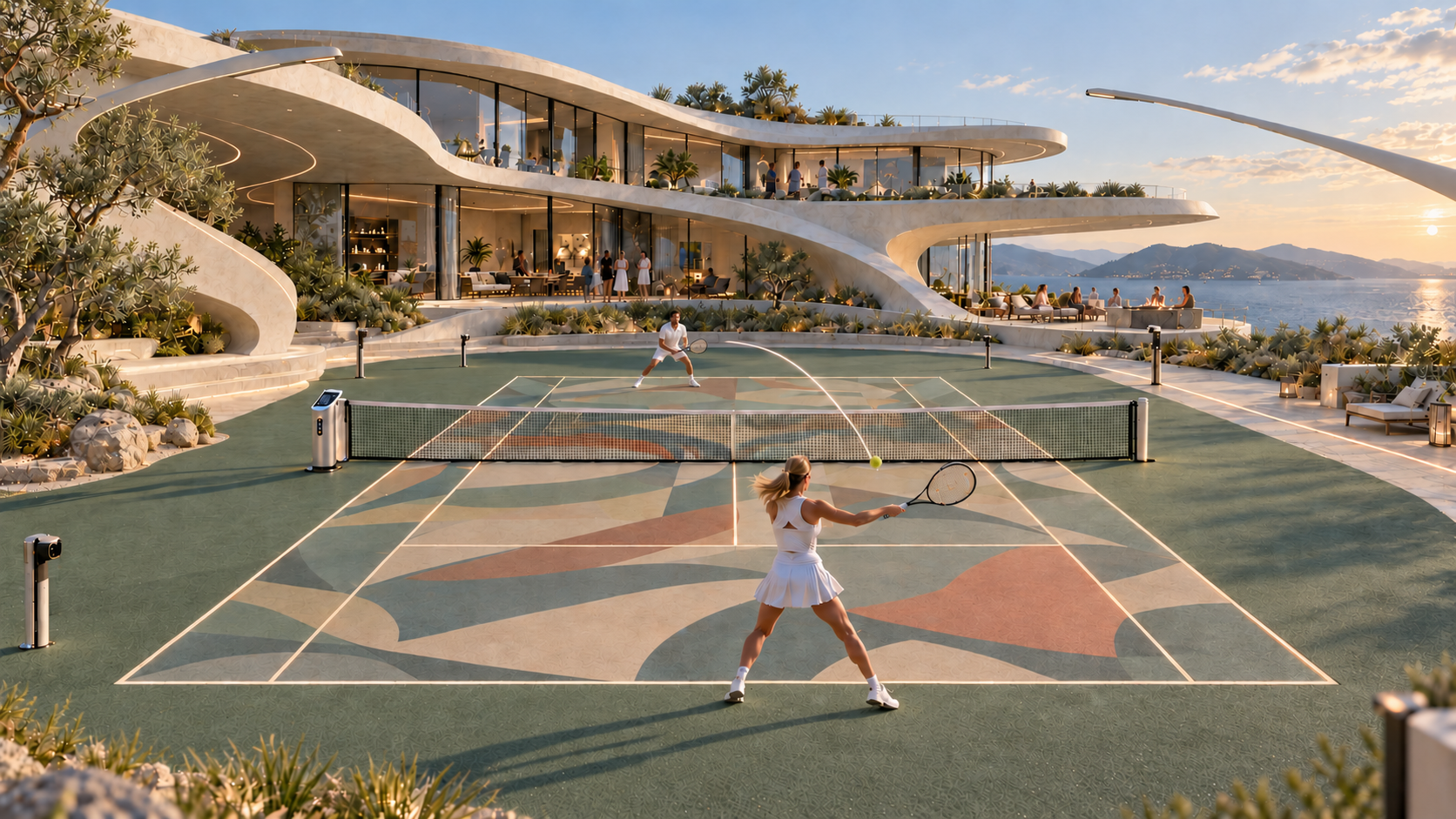
In July 2025 we looked ahead to the tennis homes of tomorrow and made a careful prediction: step onto a court in 2030, and it probably would not feel very different from today, unless you were inside one of the most forward-thinking homes in the world.
That already sounds cautious. Days before that piece went up, Wimbledon had played its first Championships without line judges in 148 years. Since then a robot has traded rallies with a professional at the Billie Jean King Cup Finals, and a court in Valencia has been handed to an artist as a canvas. For most of its history the court was a surface. It is turning into something that watches, answers and responds. This is where tennis court innovation stands now, and where it could go on a court of your own.
The Court That Sees
At Wimbledon in 2025, nobody stood on the lines. Cameras made every call, as they do now across the men's tour. The change that matters for a private court came this year. In February the ITF approved the first real-time system for competition below the elite tier, a sign that line calling is leaving the stadium.
PodPlay, whose technology now runs tennis, padel and pickleball facilities, shows where it goes next. Its Autonomous Outdoors system wraps a court in a sound-dampening glass enclosure, then adds cameras for instant replay, a digital scoreboard tied to bookings and a door with access control, so the court runs without anyone on staff. It is designed for rooftops, resorts and residential communities, and it is a glimpse of a court that opens, keeps score and replays itself.
Picture what that does to a home court. The ball that clips the line on match point is called instantly, by something with no stake in the result. Every rally is filmed. The longest-running argument in the family is settled for good.
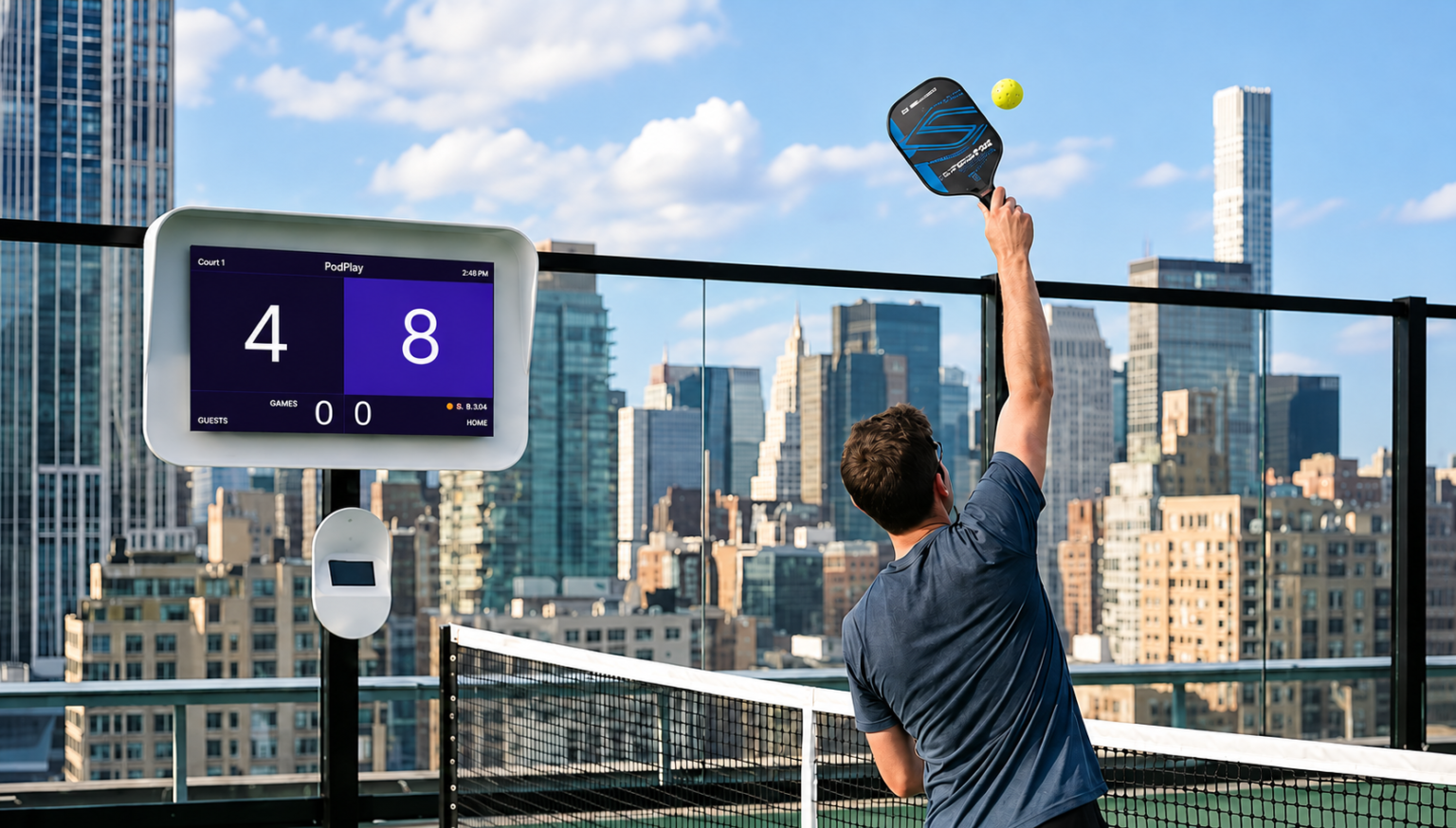
PodPlay scoreboard courtside on a rooftop court. Credit: PodPlay
The Court That Coaches
The smart courts we wrote about last year tracked the ball. The new generation watches the player. SportAI, for one, builds a 3D picture of how a player moves from ordinary video, and measures swing path, power generation and the point where the ball was struck.
The idea is simple and slightly uncanny: a court that knows your forehand better than you do, and can show you, frame by frame, how your swing differs from the one you think you have. It will never replace a coach in residence. It gives the coach something new to work with between visits.
The Court That Plays Back
In September, at the Billie Jean King Cup Finals, a robot took the court with the professional Wang Qiang. By its maker's account it moved her from corner to corner with topspin and high, deep balls, varying where it placed each one. The company names clubs as the next step.
That is the frontier. Closer to home there is already a ball machine that reacts: it tracks your shots as you play and adjusts the speed and difficulty of what it sends back. A traditional machine repeats a routine. This one pushes back.
The Court as a Canvas
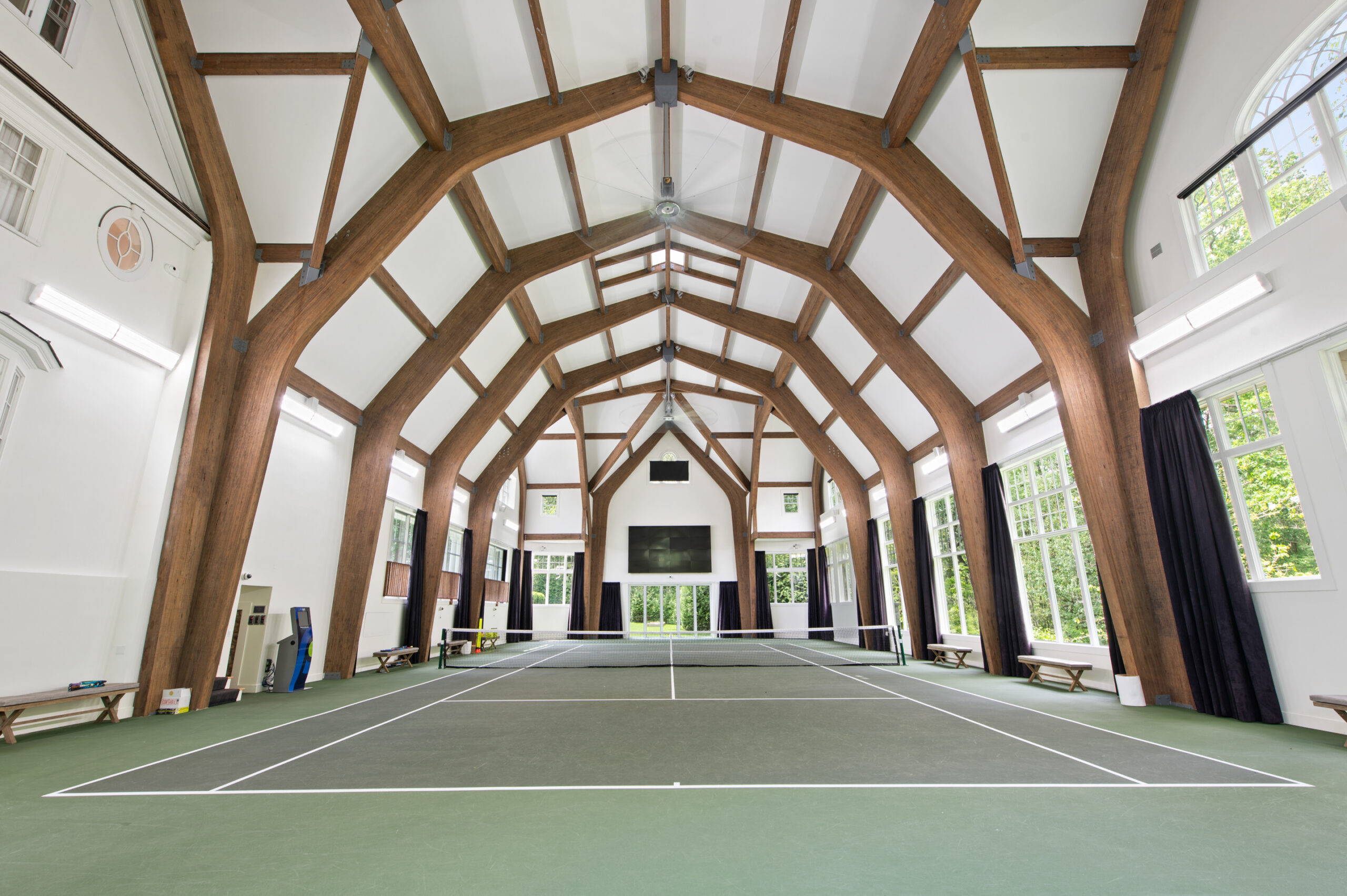
The most beautiful innovation we found has no sensor in it. At Casa Axis, the Valencia creative space of the artist Felipe Pantone, the tennis court is a commission. MRKA painted it in 2025. This year Spok Brillor spent a twelve-day residency repainting it so that, from certain angles, the court seems to sink beneath the players. The space runs a tennis tournament for artists, and the court passes from one painter to the next.
It changes the question an owner asks. Not which green or which blue, but whose hand. Court coatings can now be color-matched to order, so the palette is no longer the limit.
The Court That Changes Shape
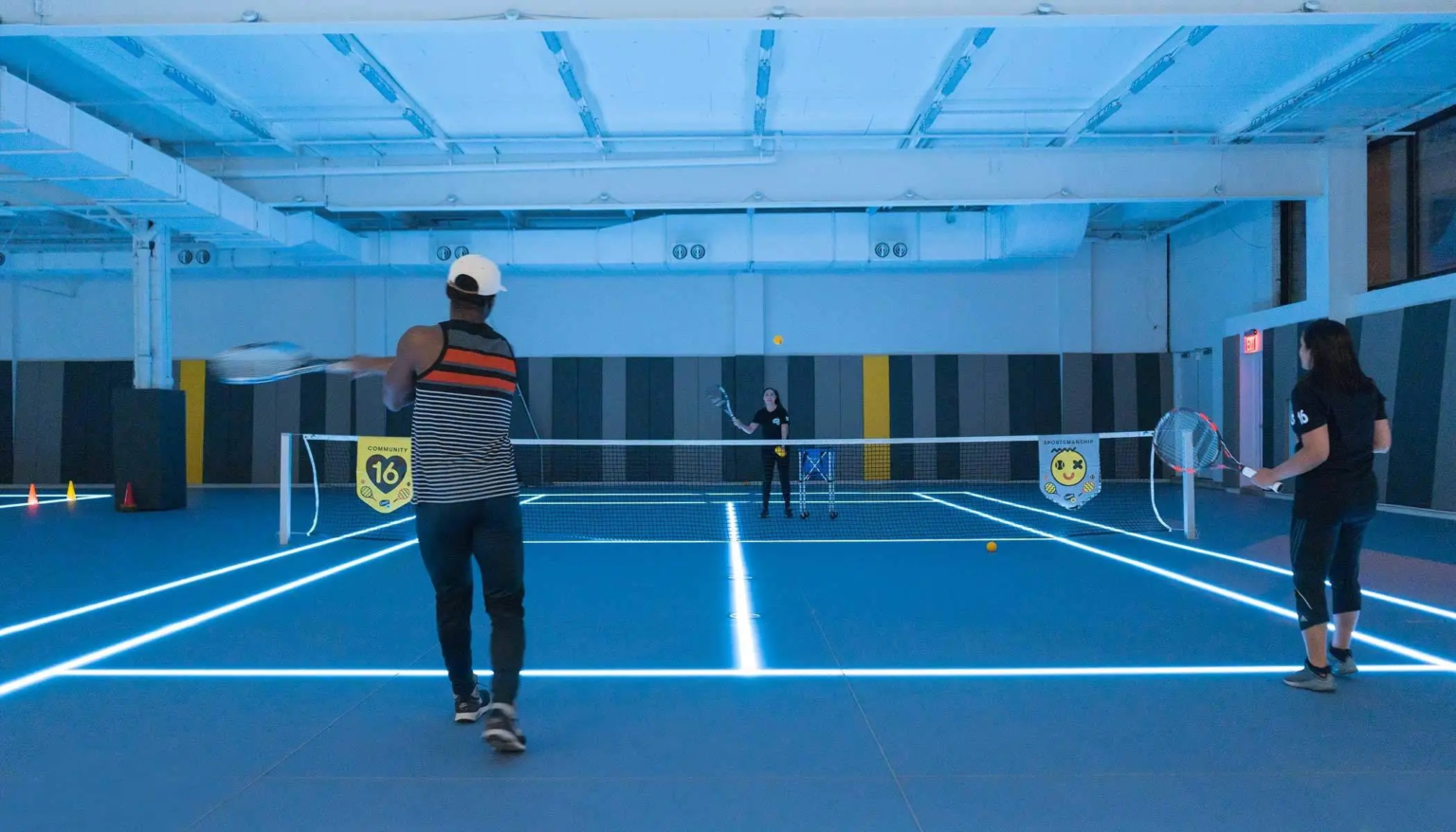
Indoors, even the lines are becoming optional. At Court 16 in Long Island City the floor is glass, with LED lines lit from beneath that switch between tennis and pickleball at a touch. For a home with an indoor court, it is one room that can be several courts.
The ground is moving too. Wimbledon has stitched synthetic fiber into five of its practice and community courts to learn how much play a lawn can take. And clay, the surface everyone loves and nobody wants to maintain, now comes in a hybrid form that Har-Tru says can go over an existing hard court in as little as two days.
The One That Was There All Along
The most surprising discovery of the year involved no installation at all. In March 2026 two scientists published a study showing that America's green clay courts draw carbon dioxide out of the air as their crushed stone weathers: about 25,000 metric tons a year across some 17,000 courts. The court was a piece of climate technology long before anyone called it one.
What Is Left to Invent
None of this is meant to take people off the court. Used well, it does the opposite. The camera takes the dispute out of the match, the machine takes the repetition out of practice, and the screen gives the coach something to point at. What is left is the part no technology replaces: the rally, the friend across the net, the family watching from the terrace. The best court of the future will not play for you. It will give you more time to play.
If a court can now see, coach, play back, change its lines and clean the air, what is left for it to learn?
Perhaps it reads the wind and tells you which end to serve from. Perhaps its lights follow the ball. Perhaps it is something nobody has thought of yet, because the best ideas tend to come from people who have played on the same court for twenty years and know exactly what it is missing.
What would you invent for yours? And if the court you are imagining still needs a home around it, that is where we come in.